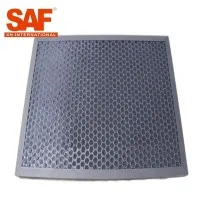
The technical requirements for air filters in thermal power plants are different from those in pharmaceutical factories, which pursue absolute cleanliness and sterility. The core goal is very clear: to protect valuable core equipment (such as gas turbines, air compressors, and steam turbines) with the lowest operating energy consumption under extremely harsh working conditions (high dust, high humidity, corrosive gases), and ensure their long-term stable operation.
According to the latest industry applications and technical specifications, these requirements can be systematically summarized into the following five core dimensions:
Five core technical requirements for air filters in thermal power plants
1, Filtering efficiency and grading
- Objective: To protect the blades and prevent blockages. Common standards: EN779/EN1822/ISO 16890.
- Typical configuration: Gas turbine: two-stage filtration, coarse efficiency (M5/F7)+high efficiency (E12/F9), overall transmittance<0.5%.
- Air compressor/fan: F7-F9 level, with an efficiency of ≥ 99.9% for 0.5 μ m particles.
- Special environment: Explosion proof self-cleaning filter, used in flammable dust areas such as coal transportation bridges. Multiple filtration combinations should be carried out according to the type of equipment and air quality to ensure the cleanliness of the final equipment intake.
2, 2 Resistance and energy consumption characteristics
- Initial pressure difference: The lower the better, such as gas turbine fine filter<270Pa, air compressor filter ≤ 150Pa.
- Operating resistance: usually controlled between 300-600Pa, with a recommended final resistance value of ≤ 1000Pa.
- Economic correlation: For large units, reducing resistance by 100Pa can save significant electricity costs annually. Low resistance is the key to reducing the power consumption rate of power plants, which directly affects the long-term energy consumption of wind turbines.
3, Self purification and longevity
- Self cleaning method: mainly using pulse back blowing, combined with pressure difference/time dual-mode control. The pressure of the blowback air source is usually 0.4-0.6MPa.
- Filter material lifespan: Gas turbine fine filtration requires>12000 hours; The expected lifespan of the air compressor filter cartridge is over 2 years.
- Ash cleaning effectiveness: It can handle viscous dust such as coal powder, willow catkins, sea salt, etc. The self-cleaning system is the core to achieve long lifespan and unmanned operation, and needs to adapt to the characteristics of on-site dust.
4, Environmental adaptability and materials
- High temperature: withstand instantaneous high temperature impact of 80-120 ℃.
- High humidity/corrosion: Coastal power plants require 316L stainless steel shells and corrosion-resistant filter materials (such as PTFE film, nano coating).
- Explosion proof: Filters used in coal dust environments must comply with explosion-proof standards such as Exd II BT4.
- High air volume: A single set of equipment can handle air volumes of tens of thousands or even millions of m ³/h. The material selection should strictly correspond to the geographical location and specific application areas (indoor/outdoor/coal yard/seaside) of the power plant. |
5, Testing and Standards
- Performance testing: According to EN1822 (such as E12 level), EN779 or ISO 16890.
- Structural testing: Refer to ISO 2941-2943, ISO 3968 and other series of standards to verify the anti rupture, structural integrity, pressure resistance, etc. of the filter element.
- Third party certification: Testing reports from CNAS or international mutual recognition organizations (such as Eurofins) are required. During procurement and acceptance, requiring suppliers to provide type test reports that comply with international standards is a mandatory threshold for ensuring quality.
Overall, the technical requirements for air filters in thermal power plants can be summarized as achieving a perfect balance of "high efficiency, low resistance, long lifespan, and maintenance free" in harsh environments.