

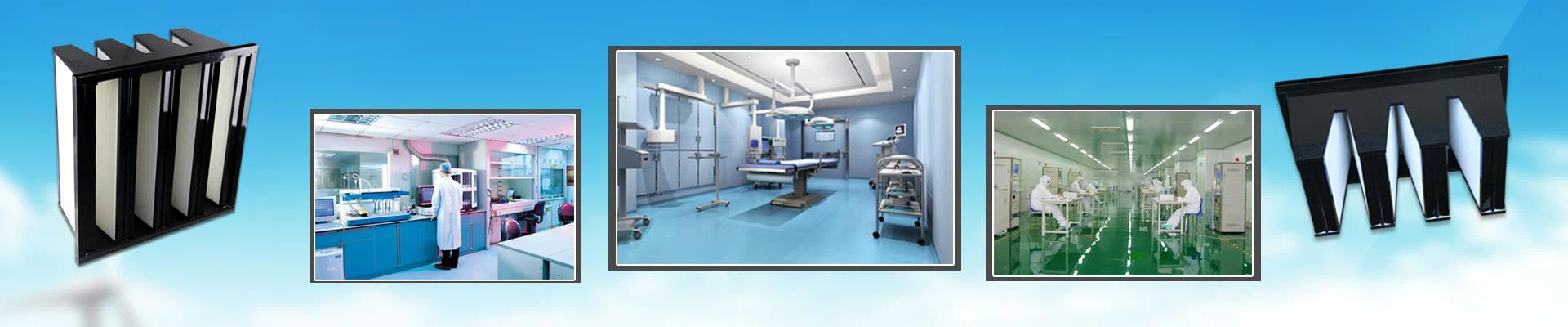
Portable Clean Room
What is Portable Clean Room?
The portable clean room is a compact positive pressure system that provides an exceptionally clean laminar airflow inside the hood. This system utilizes a dual-stage (single for pcr2) filtration process which consists of a merv8 pre-filter and a hepa filter with an efficiency rating of up to 99.97% efficient on particles 0.3 micrometers and larger. For applications requiring a higher efficiency, an ulpa filter is available with an efficiency rating of up to 99.9995% at 0.12 micrometers.Our portable clean rooms are designed to be cost-saving, by offering a compact solution that requires very little space and as much mobility as needed.
Advantages of Portable Clean Room
Flexibility and adaptability in design
Portable clean rooms offer unparalleled flexibility, allowing industries to modify and adapt spaces according to their specific needs. This adaptability is crucial for industries that face constantly evolving challenges and requirements. Whether it's a sudden change in production volume or a shift in process requirements, portable clean rooms provide the ability to adjust swiftly, supporting continuous improvements and innovations in operational procedures.
Cost-effective solutions
Cost efficiency is a key advantage of portable clean rooms. They require significantly less investment compared to traditional clean rooms, making them a viable option for businesses looking to optimize budgets without compromising on quality. In fact, the modular cleanroom segment is increasingly popular because it helps to streamline construction processes and reduce downtime, paving the way for cost-effective operations.
Enhanced mobility and accessibility
The mobility of portable clean rooms enables industries to deploy them in various locations easily. This feature is especially beneficial for businesses with dynamic operational needs that demand quick setups and teardowns. For instance, in pharmaceutical research and semiconductor manufacturing, having the ability to move and install cleanrooms rapidly, in response to project requirements, adds a competitive edge.
Improved contamination control
Portable clean rooms provide superior contamination control, ensuring that environments maintain high standards of cleanliness. This feature is vital for industries that require stringent hygiene and sterilization protocols. By integrating advanced air filtration systems such as hepa and ulpa filters, such as those noted in cleanroom technological advancements, portable clean rooms can minimize the presence of particles and contaminants effectively.


Why Choose Us
Our Factory
Established in the year of 2002 and having almost 18 years of experiences in developing and manufacturing sustainable clean air solutions, and also has an excellent team of professional engineers in researching ,designing, constructing clean room equipments and hvac projects.
Our Product
80℃ pre-filters,medium & hepa filters,high-temp resistant 250℃ & 350℃ ,gaseous pollutant chemical filters,gaseous pollutant chemical filter materials.Clean work bench & laminar flow for level 100,ffu(fan filter unit),air showers,pass boxes and biosafety cabinets.
Our Certifications
Entitled to"shenzhen high-tech enterprise certification " no.Sz2016419,through iso9001 environmental quality management certification, sgs environmental certification, claimed intellectual property rights, 3 national patents.
Our Serve
Currently has the departments of r&d , production , sales ,packaging , after-sale service that could make sure to provide the clients an one-stop reliable factory for the clean room.After years of dedicating in this field of air clean , xiangnan high-tech has won the trust and recognition of the customers from all ove the world.
Types of Portable Clean Room
Soft wall portable cleanrooms
Soft wall cleanrooms provide a flexible, mobile, efficient, and cost-effective way to establish a controlled clean air environment quickly. Designed to convert any space, regardless of location, into a high-performance cleanroom, these units are as robust, durable, and resilient as traditional cleanrooms, despite their softer walls.
Rigid wall portable cleanrooms
Rigid wall portable cleanrooms offer the same flexibility and high performance as soft wall cleanrooms. The key difference lies in their wall system, which is constructed from sturdy materials, including various forms of clear plastics, providing greater strength and durability.
Bio-clean cleanrooms
Bio-clean cleanrooms are semi-rigid structures designed to address the specific needs of the medical industry in managing microbial contaminants, as well as the particulate requirements of the electronics, aerospace, and high-tech sectors. Like other modular and portable cleanrooms, bio-clean cleanrooms offer easy expandability to adapt to the evolving needs of both medical and technical fields.
Isolation medical exam pods
A notable innovation in portable and flexible cleanrooms, emerging from the covid-19 pandemic, is the isolation medical exam pod. These pods are designed to facilitate the testing and examination of workers and patients, minimizing the risk of exposing others to potentially hazardous conditions. They feature seamless flooring for effective cleaning and surface disinfection.
Post and panel portable cleanroom
The post and panel design of a portable cleanroom offers several compelling advantages, making it a popular choice. This design allows for easy reconfiguration, adjustment, and expansion of the cleanroom to adapt to a company’s evolving needs.Post and panel cleanrooms feature four-foot panels and stud posts that can be dismantled into two pieces. This design enables the removal and replacement of individual panels without disrupting the others. All components of a post and panel cleanroom are reusable or storable. The system includes built-in raceways for convenient access to utilities, ensuring the cleanroom's classification remains intact.
Components of Portable Clean Room
Modular cleanroom wall panels
When it comes to quality cleanroom construction, your cleanroom is only as good as the environment you build. While cleanrooms rely on fan filter units and other heavy-duty filtration systems to keep them clean, your required level of cleanliness can only be achieved if your building is working to keep contaminants out. And that’s where wall panels and modular wall systems come in.
Post & panel cleanroom construction
Post & panel cleanroom construction relies on a series of wall panels, which are connected by heavy-duty, structural posts. These posts have a hollow interior and a removable cover where trades can install the necessary equipment and systems like wiring, communication, or even plumbing. This not only makes your installation process fast, but it helps to reduce inspection time and future maintenance needs. Professionals need only remove post covers to access internal components, saving hours of maintenance time and speeding along the inspection process.
Cleanroom filtration systems
Another essential component of cleanroom construction is the filtration system your cleanroom will require. Your industry and iso requirement will dictate a certain level of cleanliness, and for most cleanrooms, that means some combination of hepa and ulpa filters, as well as a series of fan filter units to direct airflow throughout your modular cleanroom.
Cleanroom windows
Windows are essential to the visibility and observability of work in any cleanroom, regardless of application. But, because of the strict cleanliness requirements of a cleanroom, traditional windows are insufficient. Cleanroom windows are instead manufactured to provide as much light and visibility as possible, while restricting the potential for air, particulate, or contaminants to either enter or escape the cleanroom. This means smooth lines, reduced surface areas for dust and particles to collect, and no ability to open windows.
Cleanroom doors
Your cleanroom’s doors are paramount to its ability to maintain a clean environment. Doors are one of the most common fail points for any cleanroom. While cleanroom doors can be made from a variety of materials, it’s best to choose modular cleanroom door options that are easy to clean and wipe down, and that can be opened and closed in a way that minimizes disruption. For this reason, sliding doors are often preferable, though traditional and automatic doors are also very common.
Cleanroom ceiling
A cleanroom ceiling differs quite a bit from a traditional building. Not only does a cleanroom ceiling need to frame up your workspace, but it also has to support the heavy filtration units that make your cleanroom clean. What’s more, many cleanrooms are built within existing facilities. This means a strong, stable, and freestanding ceiling grid is required to ensure you get exactly the space you need for your application.
Cleanroom accessories
While your walls and air filtration system form the foundation of your cleanroom, there are many more components that go into making it functional. From airlocks to air showers, gowning rooms, pass-through chambers, and more, all of these accessories add functionality to your modular cleanroom. Each also presents new potential fail-points to your cleanroom, which is why it’s so important to work with a cleanroom expert when building your modular cleanroom.
The 7 Steps to Portable Clean Room Installation
Arguably the biggest benefit of installing a portable clean room is just that: The installation. The portable clean room installation process is fast and uniformed. Since components are pre-engineered and manufactured in a controlled environment offsite, they’re ready to install as soon as they’re delivered. In some cases, this can take just a few days! Here’s an overview of what each step of the portable clean room installation process looks like, from design drafts to finishing touches:
Create designs
A great cleanroom starts with a great design. To start the project off, a lot of time is spent in the design phase, ensuring that all aspects are feasible and highly detailed. This sets the scene for a successful, error-free manufacturing process.
Manufacture components offsite
Next up is engineering and manufacturing. In a controlled facility offsite, various cleanroom components are manufactured according to the design specifications listed. Detailed, high-quality work here helps ensure that no problems arise during the installation process.
Deliver components to the construction site
Once manufacturing is completed, each component of the portable clean room is delivered to be assembled onsite.
Build
This is where the true portable clean room “installation” process begins. Expert installers work to assemble each component of the portable clean room until the final structure is complete. This stage can vary from a few days to several weeks, but will depend on the size of your project.
Connect utilities & services
In order to get the cleanroom running optimally, all ancillary services need to be connected and properly installed. This includes hvac, electrical, plumbing, and more. Close and frequent coordination throughout the modular cleanroom installation process helps to ensure all systems are up and running smoothly.
Implement additional equipment
Once the portable clean room structure is standing, any additional equipment is incorporated. Many cleanroom industries and applications require specialized machines or technologies to complete everyday tasks. Aside from the usual air filtration systems, this could include anything from workstations to pass-through chambers to conveyor belts.
Complete qualification & validation process (if necessary)
Most cleanroom projects require some sort of certification, qualification, or validation. The type needed depends on what standards and classifications are required for the industry but could be one or more from this list: Gmp, cgmp, iso, astm, or usp. These approval processes are there to confirm the cleanroom is safe, effective, and efficient for the application it’s expected to host.
Application of Portable Clean Room


Uses in pharmaceuticals
Permanent cleanrooms have long been essential for the production and manufacturing of medicines, ointments, and medical instruments. The hygienically uncontaminated conditions they provide are required by the food and drug administration (fda) to ensure the safety and efficacy of pharmaceutical products for consumers.
Technology uses
For high-tech industries, maintaining ultra-clean environments is essential due to the delicate and sensitive nature of their products. As production needs and demands for technical products can change rapidly, immediate adjustments to production facilities are often required. Portable cleanrooms offer an ideal solution, seamlessly integrating into technical processes and providing the perfect iso-qualified environment for these industries.
Manufacturing and industrial operations
Traditionally, many manufacturing and industrial operations did not require spotless and uncontaminated environments. These operations typically relied on heavy machinery and complex assembly processes managed by advanced technical devices.
Food production
In the food industry, where public consumption is a primary concern, the fda closely monitors production processes to ensure food products are produced in hygienically sanitized conditions. Consequently, food producers often maintain permanent cleanrooms to support their regular production needs.
Cleanrooms for cultivation
Cultivation processes require cleanrooms that can be rapidly set up and adjusted while providing the necessary protection for products during their growth cycle. Portable cleanrooms meet these standards, offering the required flexibility and secure sealing. Unlike other industries, the cultivation sector needs cleanrooms with load-bearing capabilities to support the weight of racks and products. Therefore, portable cleanrooms designed for this industry are built with substantial strength to handle these loads effectively.
Before going any further, cleanrooms create multiple medical consumables, and it is evident that there is scope for zero error. Furthermore, the use of iso 7 and iso 8 cleanroom further stresses adherence to the stringent quality guidelines. Hence, some of the critical reasons that lay stress on the cleanroom maintenance include:
Irrespective of the type of the cleanroom and its equipment, it is necessary for the dedicated cleanroom maintenance to improve its efficiency. Further, it is essential to ensure the longevity of equipment that is impossible without maintenance.
Cleanrooms at higher levels of iso ratings should offer high levels of sanitization. It ensures that contaminants and minute particles are within the prescribed limits. Hence, to ensure the cleanliness standards, iso ratings, specific layouts, etc., are ideally managed by the cleanroom maintenance.
Cleanrooms with lower levels of iso ratings need maintenance and cleaning to ensure productivity and maintain the prescribed standards. However, these cleanrooms may not be highly sensitive to particles or contaminate volume like high iso rating cleanrooms but still need dedicated maintenance.
As prevention is better than cure, the prevention of cleanroom is better than crossing the safety and production guidelines to create rejected products. This prevention is best ensured with the regular maintenance of the cleanroom system and the equipment.
Our Factory
Through 18 years of focusing on air purification equipments , Shenzhen Xiangnan High-temp has been the leading supplier of the big companies such as Foxconn, LG , BYD , Oppo, Huawei etc for supplying the air clean systems. our Dr. engineers has almost 25 years of experience in the field of air filter so we have the ability to manufacture high quality air filters and clean room enquipments on the international markets, aways satisfying various of any designing demands from the clients.


Certifications


FAQ
Feel free to wholesale quality portable clean room from professional portable clean room manufacturers and suppliers here. For more information, contact our factory now.