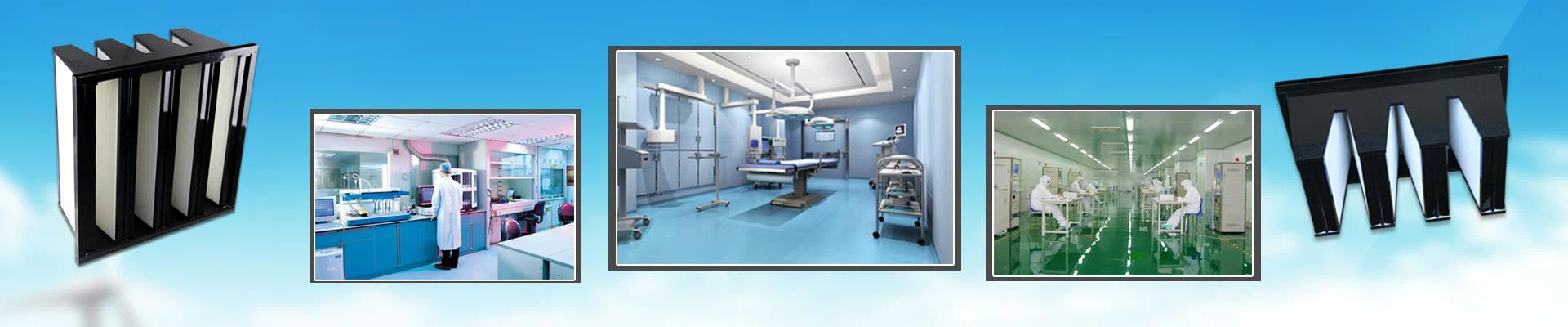
Clean Room Equip

● Modular cleanrooms and cleanroom equipment are crucial for manufacturing, medical and scientific applications requiring a controlled environment free of airborne particles that could potentially damage or contaminate sensitive products such as circuit boards, medical devices and mechanical components.
● Cleanrooms are designed in various sizes and configurations and are rated based on cleanroom industry ISO 14644-5:2004 standards and Federal Standard 209E.
● Other cleanroom equipment includes fan filter units with HEPA or ULPA filters, and furniture and accessories such as tables, benches, racks, and storage cabinets.

FirstLast
Worldwide Industrial Air Filter Market Forecast


What is a cleanroom?

A cleanroom or clean room is a facility that is normally used as a part of special industrial production and scientific research, and also in the manufacturing units of pharmaceutical products and items. As a controlled environment, a cleanroom is a room that is free of pollutants like dust, airborne particles and microbes, and also aerosol particles as the cleanroom equipment helps in filtering them out. Cleanrooms are mostly used for the purpose of manufacturing products like electronics, pharmaceutical products, and medical equipment.
A cleanroom can also be categorized into different levels of contamination depending on the number of particles that can enter the space. Clean Rooms are also known to control different variables like temperature, airflow and humidity.


How does a cleanroom work?


The primary function of cleanrooms is to filter out any incoming and get rid of existing pollutants, particles and contaminants from

the outside air. Sometimes industries also use HEPA filters to start the first filtering of air that comes from outside. Then the room that

has the cleanroom equipment is actually a room. The settings and modes of the cleanroom equipment are always customised per the specifications required by the room.


Cleanroom technology has to work in the environment to control the contamination that happens. For that to happen, a lot of things

have to be controlled. For instance, the airflow rates and direction has to be controlled. We also need to monitor the temperature and humidity from time to time. A special filtration is also required to control the environment and clean it. While the cleanroom equipment does its job well, we also need to control or eliminate, if possible, the sources of these particles that can contaminate the environment. Cleanroom equipment is a great choice to have and make when buying decontamination equipment as they are planned and manufactured using more stringent methods and protocols.

Who needs cleanroom equipment?

Many companies need cleanroom equipment for various reasons. For instance, if the company and industry are manufacturing something that is very easily affected by the contaminants or particles available in the air, then they will need a cleanroom. The companies and industries that need a cleanroom are :

Manufacturing Companies

Research Facilities

Pharmaceutical Companies

Medical Laboratories

Electronic Part Production of different industries like

Aerospace Industry

Nanotechnology production

Optics and Lens Manufacturing

Military Applications

Why do industries need cleanrooms?


As mentioned before, many industries like electronic, high-tech, semiconductor, pharmaceutical, aerospace, medical and many other industries are dependent on cleanroom technology. Technology has helped and contributed to many things like maintaining full-fledged medical records of patients all in one place, right from their birth up until now. Similarly, the chance of contamination of the air in manufacturing units goes higher. For all these industries, it is imperative that they get a cleaner, safer, and uncontaminated environment while they are manufacturing or distributing a viable product.

You can find great clean room equipment at the leading clean room equipment co.,ltd. in China and purchase the equipment that best suits your company’s requirements and needs. You can also browse through the other HEPA filter that they have while you are at it.

                                Types of Clean Room Equip:

1

Portable clean room:A portable or modular cleanroom is a small, preconstructed (or prefabricated) standalone system that needs electrical power and cooling.

2

Air showers: specialized enclosed antechambers which are incorporated as entryways of cleanrooms and other controlled environments to reduce particle contamination. Air showers utilize high-pressure, HEPA- or ULPA-filtered air to remove dust, fibrous lint and other contaminants from personnel or object surfaces. The forceful "cleansing" of surfaces before entering clean environments reduces the number of airborne particulates introduced.

3

Clean Bench:A clean bench is an enclosed workbench that is controlled to a certain air cleanliness level to prevent contamination such as dust, dirt, and airborne microorganisms. The clean bench can produce a high degree of air cleanliness locally in a room with a low level of air cleanliness by allowing the filtered clean air to flow directly to the item being worked on. The clean bench, basically, has a blower, a high-performance filter (HEPA filter, ULPA filter, etc.), and lighting, and some have such functions as water, gas, sink,, and exhaust as needed.

4

Clean Room Pass Box:Pass box is a kind of facility used for transferring goods between inside and outside of clean room. It is normally located on partition walls of clean room. It can prevent any disturbance of airflow and air pressure in clean room, which can be caused by the door opening for goods transferring.

5

FFU HEPA FAN FILTER UNIT:A fan filter unit (FFU) is a type of motorized air filtering equipment. It is used to supply purified air to cleanrooms, laboratories, medical facilities or microenvironments by removing harmful airborne particles from recirculating air.The units are installed within the system's ceiling or floor grid. Large cleanrooms require a proportionally large number of FFUs, which in some cases may range from several hundred to several thousand.Units often contain their own pre-filter, HEPA filter and internally controllable fan air distribution.

6

HEPA FILTER Module:Manufactured entirely in China, the HEPA filter module includes a HEPA filter in a galvanized or stainless steel housing with an attractive fascia and integrated fan/blower option. The HEPA filter module can also realize group control. Use the group control box to control the switches and wind speed of multiple HEPA filter modules at the same time. FFU group control is an efficient, energy-saving and environmentally friendly air purification system, which consists of FFU, air ducts, filters and control systems. It is widely used in electronics, biopharmaceuticals, food processing and other fields. It has the advantages of high-efficiency filtration, energy saving and environmental protection, reliability and stability, intelligent control, flexibility and long life, and has broad application prospects in the future.

7


HEPA filter terminal units(FTU ):The terminal units of the FTU series have the dual function of filtering the air with high efficiency absolute filters and distributing the air throughout the premises. It consists of a plenum box made from polystyrene with a circular intake on the side. It can be equipped with swirl diffusers or perforated face diffusers for laminar air flow. It is equipped with a pressure intake that controls pressure losses in the filter. FTU units are suitable for installations that require very pure, germ-free air such as clean rooms and pharmaceutical laboratories.


8

Air Sterilizer: Works by electronically polarising the particles in the air through the use of negatively charged ions and UV light. Sanitises and disinfects the air and surfaces in the space, including many types of bacteria and viruses. Doesn't require ongoing maintenance or additional costs.

FAQ

Q1: What are the requirements for a clean room?

A: ISO 1 Cleanroom Requirements: Less than or equal to 10 particles (0.1 μm) per cubic meter of air. Average airflow velocity of 0.305 – 0.508 meters/second (or 60 – 100 ft/min) Air changes per hour: 360 – 600. Fan/filter unit (FFU) coverage of 80 – 100%

Q2: What is a Portable Cleanroom?

A: A portable or modular cleanroom is a small, preconstructed (or prefabricated) standalone system that needs electrical power and cooling. They can be delivered in 4-8 weeks depending on the style and are quick to install. In addition, portable cleanrooms can typically be assembled in 1-3 weeks. The installation of portable cleanrooms takes less time because they are prefabricated. There is little disruption to normal operations and little to no contamination since the process goes so quickly. In addition, factory designed and fabricated portable cleanrooms reduce or eliminate the need for architects, engineers, and G/Cs, saving time and money. Some portable cleanrooms come with wheels or casters for easy mobility, while others are shipped in sections on pallets. When they are disassembled, moved and reassembled, 90-95% of their components or materials can be reused. Portable/modular cleanrooms are cost-effective solutions, with some styles, such as modular hardwall systems, able to qualify for accelerated depreciation. Portable/modular cleanrooms are designed to meet ISO levels 8 to 5 or Federal STD Class levels 100 to 100,000. Designed to operate as standalone cleanrooms, portable/modular cleanrooms can be used to create clean zones and hygienic work areas within an existing cleanroom making them ideal for R&D and product development. They require little space, provide mobility, are cost effective, and offer exceptionally clean and filtered airflow to create a workable, uncontaminated, and sanitized environment. The function of portable/modular cleanrooms is to control airborne particles, such as dust, microbes, aerosol particles, and various forms of chemical vapors, to meet required limits and standards. No matter the design or style, HEPA filters are the heart of every cleanroom. HEPA filters measure cleanroom particles in micrometers or microns (µ), or one millionth of a meter. They are capable of trapping 99.97% of particles that are 0.3 micron (µ) or larger, with 1 micron being approximately 1/25 or 0.04 of an inch and 1/3 of a micron equal to 1/75 or 0.001 of an inch. The use of HEPA filters guarantees that cleanroom air will be cleaned of contaminates or microbes.

Q3: What is the particle count limit for a clean room?

A: The ISO 1 specification for cleanrooms require less than 2 particles greater than 0.3 microns and no particles greater than 1.0 microns per cubic meter. The ISO 2 specification for cleanrooms requires less than 11 particles greater than 0.3 microns and no particles greater than 1.0 microns per cubic meter.

Q4: What is the process of air shower?

A: Air showers blow high-velocity jets of HEPA-filtered air to remove loose particles from people and products before they enter a cleanroom. This decontamination process means cleaner air enters the cleanroom, reducing product defects and increasing production yields.

Q5: What is the electrical load for an air shower?

A: The standard requirement for the air shower is a 208 V 60 Hz, three-phase, four-wire. See attached sheets for specific power requirements. Typical units are 13.6 FLA per blower section. Multiple sections would increase the total power required.

Q6: How an Air Shower Works?

A: Air showers operate similarly to automated car wash pressure washer systems, utilizing multiple steps throughout the decontamination process. The following cleanroom air shower specifications process details the operational aspects of a cleanroom air shower. 
 1.The worker passes through the entry door and a sensor activates interlock magnets, which lock the air shower and cleanroom doors. 
2.Numerous adjustable nozzles blow high-velocity streams of Class 100 filtered air onto the worker. 
3.The high-velocity air creates a flapping effect on clothing which produces a scrubbing action, removing particulates from cleanroom garments. 
4.To ensure all particulates are removed, workers raise their arms and rotate in place. 
5.Indicator lights signal the end of the cleaning cycle, and the cleanroom door opens. 
Additionally, it takes four to eight seconds of cleaning time and another two to four seconds for the air shower to purge contaminated air before the worker can exit. Computerized microprocessors control the cleaning and wait times associated with the air shower decontamination process.

Q7: What is the difference between air shower and airlock?

A: When a person enters the chamber, the high-velocity airflow fan that turns on is the air shower. With dual locking doors, the room itself is known as the airlock. For an easier understanding, we refer to this whole system as an air shower. The two doors of an air shower can't be opened at the same time.

Q8: What is the use of clean bench in laminar flow?

A: What does a clean bench do? The clean bench is recommended for work with non-hazardous materials where clean, particle-free air is necessary to avoid contamination. The clean bench ensures that the work surface is constantly flooded with HEPA-filtered air in a laminar flow.

Q9: How does a clean bench work?

A: The clean bench sends clean air into the enclosed box-shaped device to make the inside of the device a positive pressure and push the air out. By doing so, dust and dirt (contaminants) are prevented from flowing in together with air from outside the device.

Q10: Is a clean bench a biosafety cabinet?

A: Hazardous chemicals, potential biohazards, radionuclides and any material that is a potential allergen cannot be used in this type of equipment. A clean bench must never be substituted for a biological safety cabinet.

Q11: What is the difference between vertical and horizontal clean benches?

A: A horizontal flow clean bench takes up more floor space because the filter is located behind the unit, rather than on the top as with a vertical flow cabinet. Cleanroom class/filtration requirements How clean your bench needs to be depends on the particular operation.

Q12: What is the pass box in the cleanroom?

A: A pass box, which is also called a transfer hatch or SAS pass (sterile access system), works as a barrier between areas with different levels of cleanliness when materials do have to be moved. The equipment is used to transfer material from an area of lower cleanliness to an area of higher cleanliness, and vice versa.

Q13: What is the cleanroom transfer box used for?

A: Pass-through boxes reduce contamination in life science environments by providing a safe transfer method between a cleanroom and an adjoining room (Figure 1). Because they are never occupied by personnel, they greatly reduce risk for both spaces.

Q14: What is the use of UV light in a pass box?

A: The pass box chamber is disinfected with ultraviolet light, which can prevent some pathogens from spreading in the air or through the surface of the object.

Q15: How do you clean a pass box?

A: Keep the Pass Box Exterior and Interior free from dust: 1.Firstly, clean the cabinet; door; door handle; SS Caps and light diffuser by using dry lint free duster.
 2.Before starting usage for the first time in a day, clean with 70% Isopropyl Alcohol/ Disinfectant using a non- fiber shedding cloth.

Q16: What is the difference between FFU and HEPA filter?

A: Fan filter unit (FFU) is composed of HEPA filter or ULPA filter, a micro fan, and housing. HEPA box includes a static pressure box, a diffuser, and HEPA filter. The interface with the air pipe can be top connected or side connected.

Q17: What is the function of the fan filter unit?

A: A fan filter unit (FFU) is a type of motorized air filtering equipment. It is used to supply purified air to cleanrooms, laboratories, medical facilities or microenvironments by removing harmful airborne particles from recirculating air.

Q18: What filter is better than HEPA?

A: ULPA filters trap more and smaller particulate matter than HEPA filters. ULPA filters are 99.999% effective at removing submicron particulate matter of 0.12-micron diameter or larger, while HEPA filters are 99.97% effective for eliminating particulate matter of 0.3-micron diameter or larger.

Q19: What is the full form of FFU in HVAC?

A: A fan filter unit (FFU) is a type of motorized air filtering equipment. It is used to supply purified air to cleanrooms, laboratories, medical facilities or microenvironments by removing harmful airborne particles from recirculating air. The units are installed within the system's ceiling or floor grid.

Q20: What is the fan filter unit?

A: A fan filter unit (FFU) is a type of motorized air filtering equipment. It is used to supply purified air to cleanrooms, laboratories, medical facilities or microenvironments by removing harmful airborne particles from recirculating air.The units are installed within the system's ceiling or floor grid. Large cleanrooms require a proportionally large number of FFUs, which in some cases may range from several hundred to several thousand.Units often contain their own pre-filter, HEPA filter and internally controllable fan air distribution.

Q21: What is a HEPA filter module?

A: In the U.S., all HEPA filters must capture at least 99.97% of fine airborne particles with a size of . 3 microns, which is the particles size that most easily penetrates filter media. Any particles that are larger or smaller than .

Q22: What is a HEPA filter module?

A: It is an acronym for "high efficiency particulate air [filter]" (as officially defined by the U.S. Dept. of Energy). This type of air filter can theoretically remove at least 99.97% of dust, pollen, mold, bacteria, and any airborne particles with a size of 0.3 microns (µm).

Q23: How often should HEPA filters be changed?

A: Although it depends on the specific filter you have, as a rule of thumb, replaceable HEPA filters should be replaced every 6-12 months, depending on air quality and environmental factors. Carbon pre-filters should be replaced every 3 months, depending on air quality and environmental factors.

Q24: Do HEPA filters need cleaning?

A: If you see a visible buildup of dust or particles on a HEPA filter (it may look gray or dirty) or observe reduced airflow through your portable air purifier, you may assume that's an indication the HEPA filter needs cleaning. However, experts say HEPA filters should always be replaced rather than cleaned.

Q25: What do HEPA filters not remove?

A: HEPA filters will not remove most viruses, because they are simply too small. HEPA filters will also not remove VOCs, or volatile organic compounds, as they are also too small. Still, HEPA filter technology can be combined with other technologies that will remove these things from your air too.

Q26: How efficient is a terminal HEPA filter?

A: HEPA filters are rated by their minimum particle removal efficiency of 99.97% of 0.3-micron (µm) diameter sized particles.

Q27: What is a terminal HEPA filter?

A: Overview. The GT terminal high efficiency filter is designed and tested to extract the smallest particles out of the air. Each GT terminal filter contains a ' Minipleat-Mediapack' available in different heights with a new application technology of 'Hot Melt Spacers' to achieve lowest pressure drop results.

Q28: What is the useful life of a HEPA filter?

A: They are expected remove at least 99.97% of airborne particles 0.3 microns in diameter, while particles smaller or larger than 0.3 microns are removed with an even higher efficiency. The recommendation for routine HEPA filter replacement is every 10 years.

Q29: How often do HEPA filters need to be certified?

A: Your HEPA filters require annual testing or whenever there is an incident where the filter may have been dislodged or damaged.

Q30: Can you reuse HEPA filters?

A: After having a HEPA filter running for a while, you will need to replace the filter because there will be a buildup of unwanted particles and bacteria.

Q31: How do air sterilizers work?

A: The system works by applying a static charge of around 8000v to particles in the airstream. These particles are then attracted to collector plates which have the opposite electrical potential, thus resulting in viruses and bacteria being stripped from the air. The air is then filtered and sanitised by UVGI technology.

Q32: What is the difference between an air purifier and an air sterilizer?

A: While both devices aim to improve air quality, they work differently and serve different purposes. An air sterilizer uses UV light or heat to kill or deactivate microorganisms, while an air purifier filters out particles and pollutants from the air.

Q33: What are the benefits of air sterilization?

A: Air sterilization. that eliminates (removes) or kills all forms of life, including transmissible agents such as fungi, bacteria, viruses, spore forms, etc. it can also remove pathogenic micro-organisms or spoiling agents.

Q34: Is air filtration a sterilization?

A: Depth filters are believed to achieve air sterilization because of the twisted passage through which the air passes, ensuring that any microorganisms present in the air are trapped not only on the filter surface, but also within the interior.

Q35: Are air purification systems worth it?

A: Yes, air purifiers with a HEPA filter trap polluting particles, including dust, from the air. While it is not a method of getting rid of dust completely, it helps remove the particles in the air you may inhale. Zamora-Martinez also recommends an air purifier in dry climates with sandy environments.


Feel free to wholesale quality clean room equipment from professional clean room equipment manufacturers and suppliers here. For more information, contact our factory now.